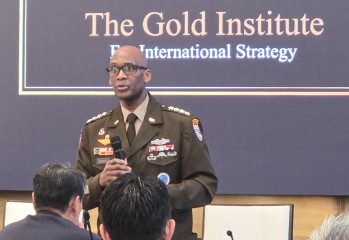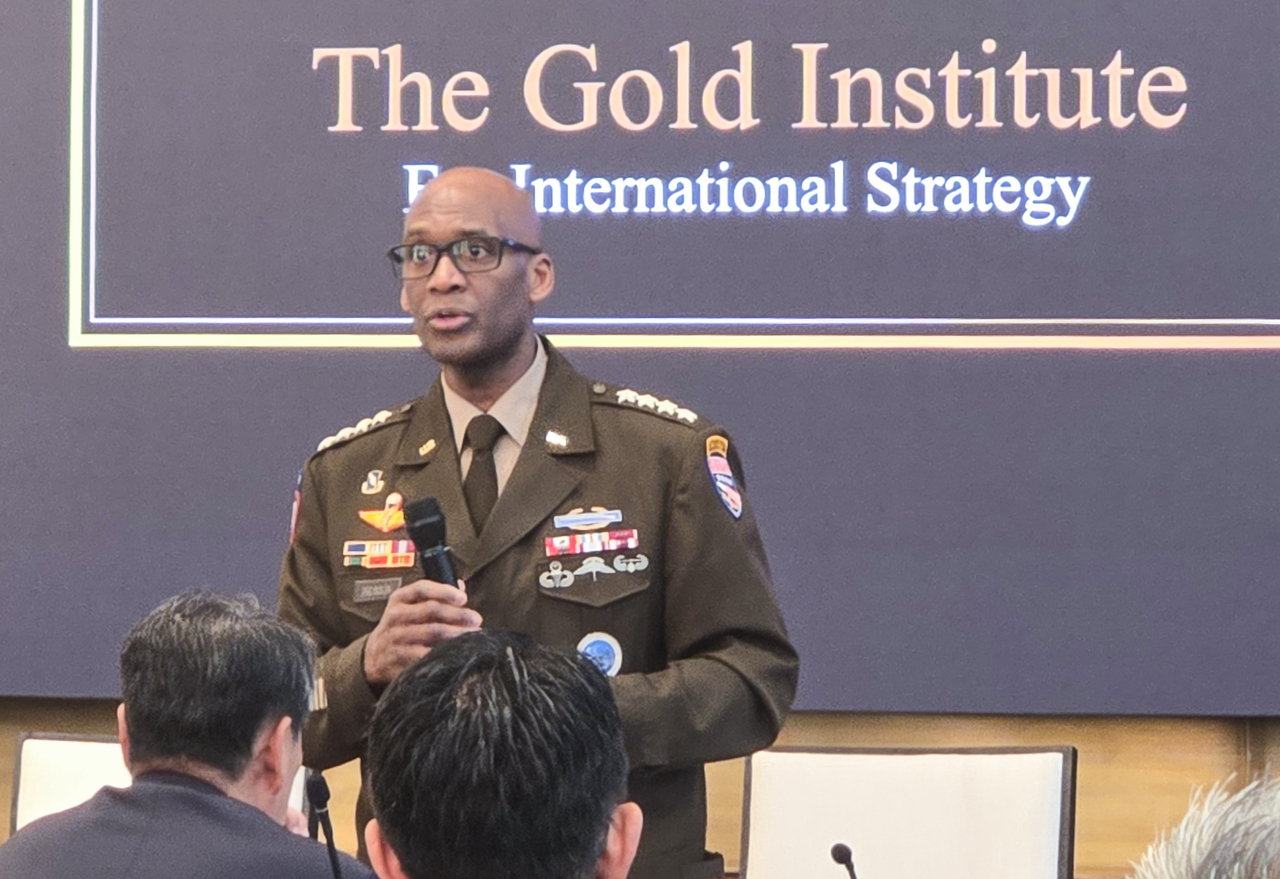
The continued fallout from US Forces Korea Commander Gen. Xavier Brunson's remark that South Korea starts from the southern fence of the Demilitarized Zone is riling up the political arena.
Both Brunson’s remark and the United Nations Command’s later explanation that the remark was made from a military standpoint and in no way concerns South Korea’s sovereignty, misses the fundamentals of the matter for South Korea.
For South Korea, the matter goes down to the Constitution.
Under Article 3 of the Constitution, the Republic of Korea is defined as consisting of “the Korean Peninsula and its adjacent islands,” which itself is the foundation for not recognizing North Korea as an independent sovereign state.
The Constitution also stipulates that the president has “the duty to pursue sincerely the peaceful unification of the homeland,” and regard North Korea not as a sovereign state but the subject of unification.
Based on Article 3, the legal and constitutional interpretation of North Korea is that of an entity that illegally occupies the land and controls its people.
To this day, South Korea appoints provincial governors of five provinces in North Korea, namely the Pyongan provinces, the Hamgyong provinces and Hwanghae Province, although South Korea has no effective control over the territory.
Based on that interpretation, other South Korean laws, including those concerning cooperation with North Korea, state that inter-Korean relations is not a relationship between countries, but “special relations established temporarily in the course of pursuing unification.”
In addition, there are practical matters.
While the DMZ is off-limits to most civilians, there are South Koreans residing in the area between the Military Demarcation Line and the southern end of the DMZ. One example is the "Freedom Village" in Paju, Gyeonggi Province. Home to some 140 residents as of 2024, the hamlet lies within the DMZ.
Despite the legal, and practical elements, South Korea’s control over the DMZ remains limited.
The UNC has been exercising tighter control over the southern part of the DMZ for South Koreans, citing Pyongyang's border fortification efforts.
According to news reports, the UNC has been refusing to clear South Korean government officials for entry into the DMZ for ecological studies, forestry studies and heritage site studies since 2024.
The UNC also recently denied entry to South Korean lawmakers who sought to inspect the site where three South Korean military personnel were injured by North Korean land mines in September.
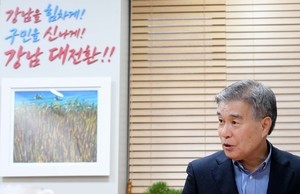
"It is wrong for (Brunson) to assert this as if it were their own right as if it were a right that South Korea cannot infringe on," Cho Yong-kun, visiting professor of Kyungnam University, said in a radio interview with MBC Tuesday.
Lawmakers of the ruling Democratic Party, such as Reps. Han Jeoung-ae and Lee Jae-gang, have floated bills to allow South Korea to exercise its authority for peaceful purposes, contrary to the UNC's argument that the authority to control people's access rests with the UNC.
These bills, which were backed by Unification Minister Chung Dong-young, remain pending.
consnow@heraldcorp.com